Check out our current Offers: Check Now
HVAC Maintenance and Tune Ups in Dunwoody, GA
Dunwoody homeowners call One Hour Heating & Air Conditioning of North Atlanta for HVAC maintenance because the systems in most of these 1950s and 1960s ranch homes are retrofits, not original equipment, and retrofit systems wear differently than the factory installed setups in newer subdivisions. We hold Georgia HVAC license GAREGCN2011384, our technicians are NATE certified (1023518) and EPA 608 certified, and we dispatch 24/7 from our Alpharetta office at 1360 Union Hill Rd #5F.
A retrofit AC system married to older ductwork has more places to drift out of tune than a clean new install. The ducts often leak, the return air is frequently undersized, and the equipment is squeezed into spaces that weren't built for it. Regular ac maintenance on these systems isn't optional upkeep, it's what keeps an already stressed setup from failing in the middle of a Georgia summer.
Comfort Club members get priority scheduling and free diagnostics.
Georgia HVAC license GAREGCN2011384
EPA 608 certification PFWXHNZ4MT
NATE certification 1023518
Daikin
Trane
Rheem
Carrier
HVAC Maintenance in Dunwoody, What's Specific to This City
Most of Dunwoody's housing was built in the 1950s through the 1970s, before central air was standard. The cooling systems in these homes were added later, often decades later, and they were fitted into houses that weren't designed around them. That's the central pattern that shapes maintenance here. You're almost never looking at a system that was engineered as a whole. You're looking at an AC unit, a furnace, and ductwork that came from three different eras and got stitched together.
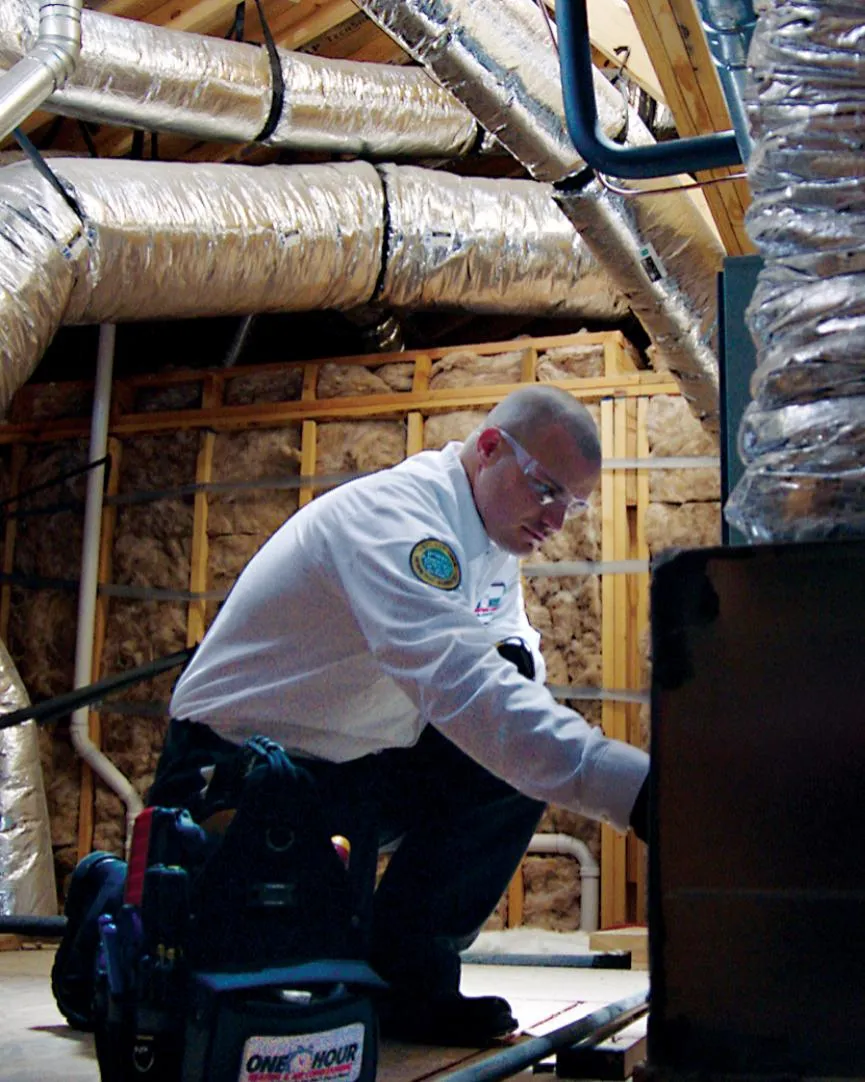
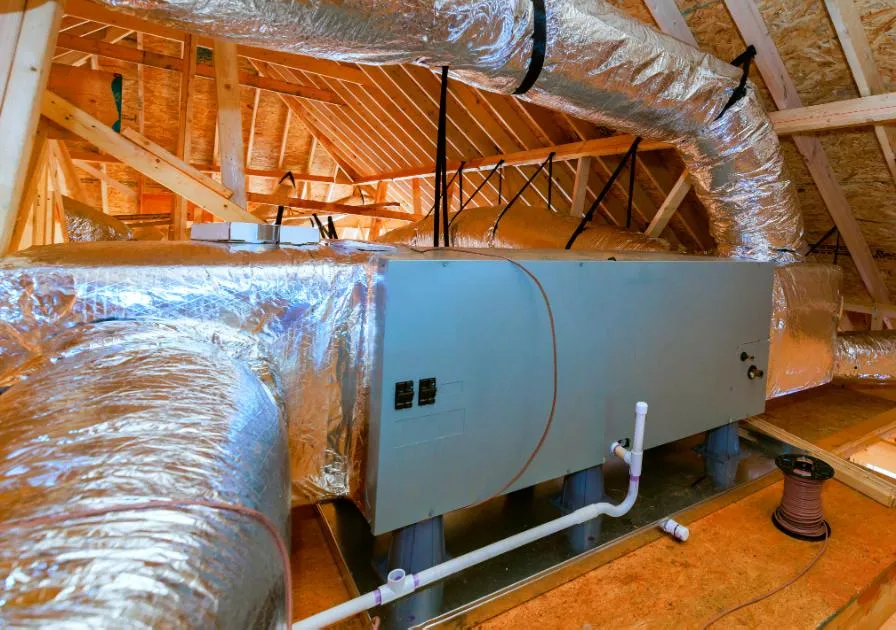
That stitching is where maintenance pays off. The aging ductwork in Dunwoody attics and crawl spaces commonly leaks 20 to 30 percent of the air it carries, so a system that tests fine at the unit can still be losing a third of its output before the air reaches the rooms. On a maintenance visit we check static airflow and look for the obvious leak points, because a perfectly tuned condenser feeding a leaky duct run is still going to leave the back bedrooms warm.
Basement furnaces are the other Dunwoody pattern. A lot of these homes have the furnace down in a basement or a crawl space, often the same age as the retrofit AC, and that location means the equipment sits in a damp, sometimes dusty environment that's harder on it than a conditioned closet would be. We pay particular attention to the heat exchanger, the blower, and the condensate handling on these, because basement units accumulate problems where you won't spot them early.
Dunwoody's mature tree canopy is the last piece. The oak, pine, and sweetgum cover that makes these neighborhoods attractive also drops a heavy pollen load from February through May, and that pollen turns into sludge in condensate drains and cakes onto evaporator coils. Spring maintenance in Dunwoody is largely about getting ahead of that before cooling season runs hard.
How We Handle HVAC Maintenance in Dunwoody
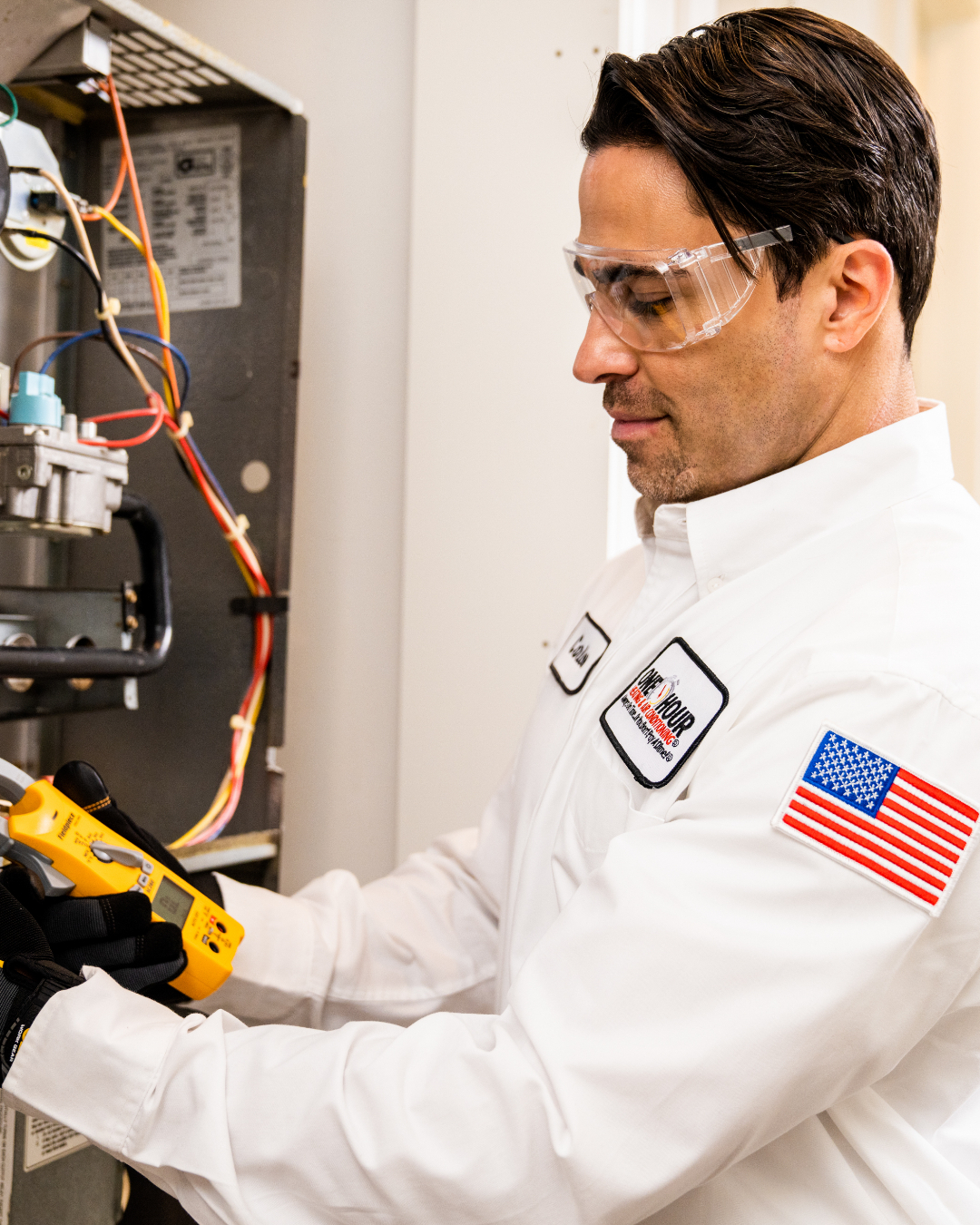
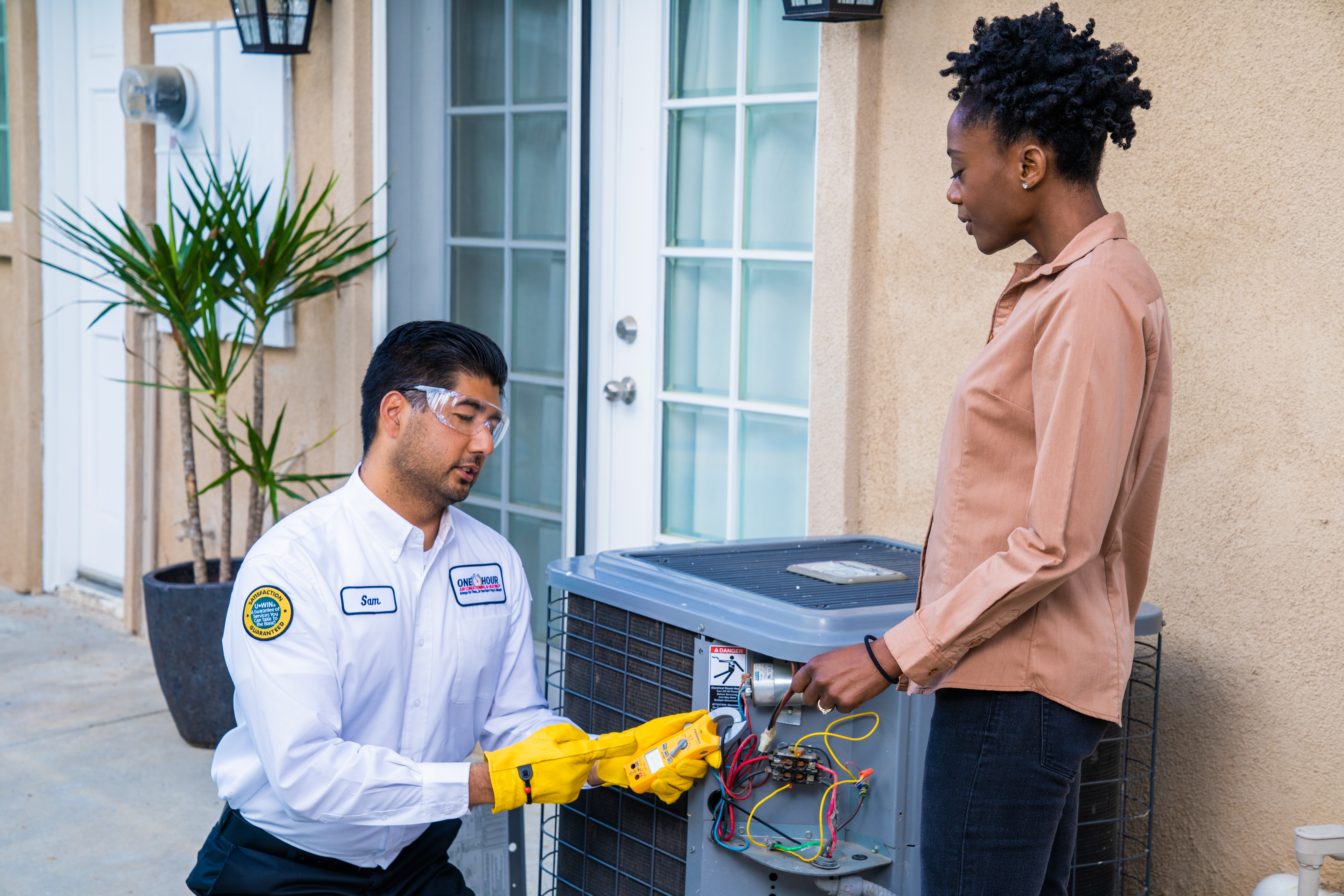
Our technician arrives with the truck stocked for what these older systems tend to need, capacitors, contactors, refrigerant, common filter sizes, and the gear to clear and treat a clogged condensate line. The tune up itself covers refrigerant charge, the evaporator and condenser coils, the capacitor and contactor, the blower motor, the condensate drain and pan, electrical connections, and thermostat calibration.
On a Dunwoody retrofit system we add a closer look at airflow and the ductwork, because that's where these homes lose performance. If we find ducts leaking badly, we'll show you where and tell you what sealing them would do for your comfort and your bills. A maintenance visit is for tuning what you have and telling you the truth about its condition.
If your AC or furnace is old enough that maintenance is just delaying the inevitable, we'll say so. A retrofit system from the 1990s on original 1960s ducts may be at the point where you're better served planning a replacement than tuning it another year. We'd rather tell you that honestly than keep billing tune ups on a system that's done.
HVAC Maintenance and Tune Ups Service
Common HVAC Maintenance Findings in Dunwoody Homes
The recurring issues here trace straight back to the housing stock. Duct leakage is the most common, 20 to 30 percent loss in attic and crawl space runs that the homeowner experiences as uneven cooling and high bills. Undersized return air is close behind, especially in homes where a second floor or addition was cooled by a system that was never sized for it.
Condensate drain clogs are heavy in spring, when pollen sludge backs up the line. In a basement furnace setup, that backup can overflow where you won't notice it fast, so we clear and treat the drains on every visit. Worn capacitors and contactors show up often simply because a lot of this equipment is past the easy years of its life, and catching a swelling capacitor on a maintenance visit is far cheaper than the emergency call when it fails on the hottest afternoon of the year.
What to Expect on the Day
You don't need to do much beyond clearing access to the indoor unit, whether it's in a basement, a closet, or a crawl space, and the outdoor condenser. We'll do the full tune up, check the airflow and ducts that matter so much in these homes, and walk you through what we found.
A standard Dunwoody home with one system takes under an hour. We leave you with a clear picture of the system's condition and a straight answer on whether it's got good years left or whether you should start thinking about replacement. If a repair is needed, you get a written estimate first, and the $89 diagnostic is waived if you proceed with the repair.
Cost Considerations for Dunwoody Homeowners
A service call and full diagnostic is $89, waived if you proceed with the recommended repair, and free for Comfort Club members. The Comfort Club plan runs $177 a year and covers seasonal tune up service, priority scheduling, and 15% off any repairs. For an older Dunwoody home where the equipment is past its easy years, that 15% repair discount and the priority scheduling tend to matter more than they would on a newer system, because older retrofit setups simply need more attention.
If maintenance turns up a repair, furnace repair runs $361 to $2,575 and AC repair runs $228 to $3,000+, depending on whether it's something small like a capacitor or something major like a compressor or heat exchanger. The cost factor specific to Dunwoody is the ductwork. If your real problem is 20 to 30 percent duct leakage rather than the equipment, sealing the ducts may do more for your comfort than any repair to the unit, and duct and air sealing work can qualify for Georgia Power's Home Energy Improvement Program rebate of up to $1,250 on a home comfort bundle.
Need HVAC Maintenance service in Dunwoody
24/7 dispatch. Upfront flat rate pricing. "Always On Time...Or You Don't Pay A Dime!"
Gallery and Video

FAQs About HVAC Maintenance in Dunwoody
My older Dunwoody home cools unevenly. Will a tune up fix that?
Sometimes, but often the cause is duct leakage rather than the equipment. The aging ductwork in Dunwoody's 1950s to 1970s homes commonly leaks 20 to 30 percent in attics and crawl spaces. A tune up will tell you whether the problem is the unit or the ducts, and if it's the ducts, sealing them is usually the better fix.
My furnace is in the basement. Does that change maintenance?
It means a little more attention to moisture, the heat exchanger, and the condensate handling, because basement and crawl space units sit in damper, dustier conditions than a furnace in a conditioned closet. We check those points specifically on Dunwoody basement furnaces.
How often should I get HVAC maintenance in Dunwoody?
Twice a year, AC in spring and the furnace in fall. In Dunwoody the spring visit is especially worth doing on time because the heavy oak and pine pollen from February through May clogs condensate drains and coils right before the system has to work hardest.
Is maintenance worth it on a system this old?
Up to a point. Maintenance keeps an aging system running safely and efficiently, but if your retrofit AC is on original 1960s ductwork and showing its age, we'll tell you honestly when you've crossed from worth maintaining to worth replacing.
Do I need a permit for HVAC maintenance in Dunwoody?
No. Routine maintenance and tune ups don't require a permit. Permits come into play for replacements and certain repairs, which in Dunwoody run through the City of Dunwoody's own community development department rather than DeKalb County.
Neighborhoods We Serve in Dunwoody
We maintain systems throughout Dunwoody's established neighborhoods. In Dunwoody Club Forest and Dunwoody North, the 1960s and 1970s ranch and split level homes are the classic retrofit case, original ductwork, basement or crawl space furnaces, and mature tree cover overhead. Around Withmere and Wyntercreek, we see similar era housing where first generation central air retrofits are now well into their later years. The common thread across these neighborhoods is heavy spring pollen on the canopy and ductwork that was never the system's strong point.

404-480-4941
1360 Union Hill Rd. STE 5F
Alpharetta, GA. 30004


COMPANY
AIR CONDITIONING
HEATING
Copyright 2026. One Hour Heating & Air Conditioning North Atlanta. All Rights Reserved.