Check out our current Offers: Check Now
EXCITING ENERGY REBATES FOR GEORGIA HOMEOWNERS
Save Up to $8,000 on a New Heat Pump, Available Through Georgia's Home Energy Rebates
The State of Georgia is helping qualifying homeowners upgrade to energy-efficient heat pump systems. One Hour Heating & Air Conditioning is an approved contractor ready to help you check your eligibility in just 2 minutes
100+ 5 Star Reviews
Locally Owned & Operated
Licensed & Insured
Free Consultations
WHO QUALIFIES FOR GEORGIA'S HOME ENERGY REBATES?
You may be eligible if you meet these requirements:
You own a home in Georgia (1-4 unit property)
Your household income is below these limits*
Your home is eligible for an energy-efficient heat pump upgrade

*These are estimates and income eligibility is confirmed upon application submission and review.
Higher Income? Households earning 80-150% AMI may qualify for partial rebates
WHAT DOES THIS REBATE COVER?
Georgia's Home Energy Rebates cover the installation of a qualifying high-efficiency heat pump system for your home. This includes:
Complete heat pump installation for both heating and cooling
Replacement of an existing HVAC system with energy-efficient electric technology
Installation performed by licensed, certified HVAC technicians
Equipment designed to provide reliable comfort in both winter and summer
This rebate covers up to 100% of system cost for qualifying households!
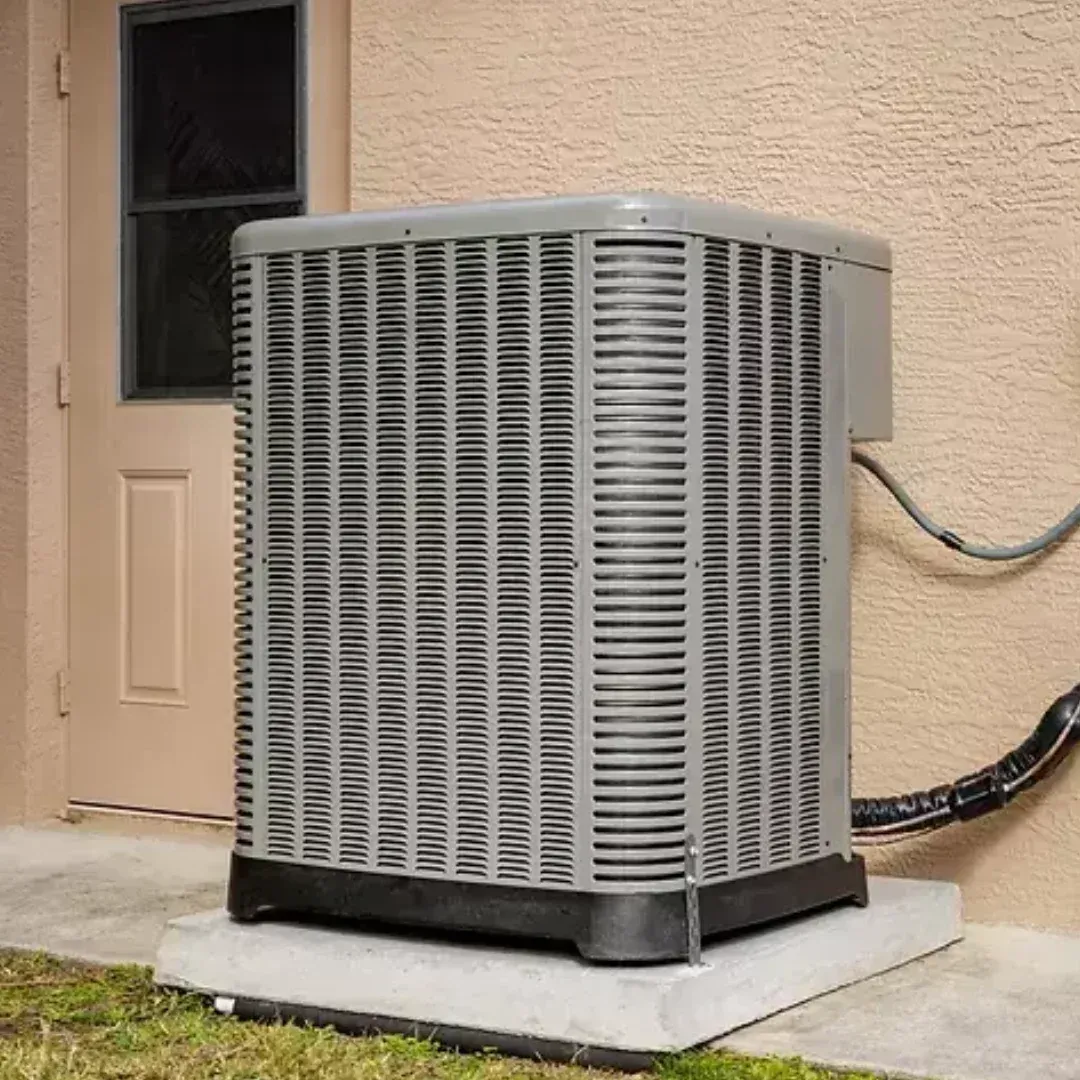
What's a heat pump? A heat pump is an all-in-one heating and cooling system that transfers heat rather than generating it, making it one of the most energy-efficient HVAC options available for homeowners.
HOW IT WORKS
Most projects are completed within 4–6 weeks, depending on eligibility and state approval.
1.
Check Your Eligibility:
Complete a quick pre-qualification form to see if you may qualify.
2.
Free Home Assessment:
We schedule a free in-home evaluation of your current HVAC system.
3.
Application Support:
If eligible, we guide you through the state application process.
4.
Professional Installation:
Once approved, we install your new high-efficiency heat pump system.
CLAIM YOUR REBATE SAVINGS TODAY
Our team will help you qualify for maximum savings on your home upgrades.
We serve North Atlanta homeowners only.
Complete the form below
FREQUENTLY ASKED QUESTIONS
Is this really up to $8,000 off?
Yes. For households earning ≤80% Area Median Income, rebates can cover up to 100% of system cost (up to $8,000)
Do I have to pay anything upfront?
We'll discuss payment options during your assessment. For many qualifying households, out-of-pocket costs are minimal.
How do I know if I'll qualify
Complete the form above. If you pre-qualify, we'll schedule a free assessment and help with the full application
What if my system isn't completely broken?
Eligibility for this rebate requires the installation of a qualifying heat pump and a fuel conversion that meets program regulations. Even if your current system is still working, you may qualify depending on your home’s setup. Our team can review your eligibility.
How long does this take?
Our pre-qualification takes 2 minutes to complete. If eligible, the full process takes 4-6 weeks from application to installation.
READ THE LATEST FROM OUR COMFORT EXPERTS
Helpful articles, tips, and updates from our blog to help you make informed home comfort decisions.
How Does Atlanta's Humidity Affect My HVAC System Differently Than Dry Climates
How Does Atlanta's Humidity Affect My HVAC System Differently Than Dry Climates?
Your air conditioner in Atlanta is doing two jobs: removing heat and removing water. In Phoenix or Denver, cooling is almost entirely a temperature problem. In Atlanta, roughly 20-30% of the energy your AC burns on a July afternoon goes toward condensing moisture out of the air. That single difference explains why Atlanta systems wear out faster, why bigger units make comfort worse, and why your house feels sticky at 72°F even when the AC is running fine.
Climate zone 3A, and why the "A" matters
Atlanta is designated Climate Zone 3A under the International Energy Conservation Code. The A means moist. Fulton, DeKalb, Cobb, and surrounding counties all carry the asterisk IECC Table 301.1 uses to flag warm-humid locations, and that asterisk changes how Georgia requires HVAC equipment to be sized.
The ASHRAE climate data for residential load calculations puts Atlanta's 0.4% annual summer design dry-bulb at 94°F. But from mid-June through August, outdoor dew points regularly sit at or above 70°F for days at a time, which is the National Weather Service threshold for "oppressive." Phoenix hits 110°F with a dew point in the 40s. Atlanta hits 92°F with a dew point in the low 70s. Your HVAC has to handle both. The second number is the harder problem.
What's actually happening inside the unit
Air conditioners cool your house by running warm indoor air across a cold evaporator coil. When the coil drops below the dew point of the passing air, water vapor condenses, drips into a pan, and drains out. That's the dehumidification.
HVAC engineers split this into sensible cooling (temperature drop) and latent cooling (moisture removal). The ratio is the Sensible Heat Ratio, or SHR. Most residential AC equipment is rated at an SHR around 0.75, so 75% of its capacity goes to temperature, 25% to moisture. That rating comes from a lab test at 80°F and 67°F wet bulb.
Real Atlanta homes in July don't match the lab. According to Energy Vanguard, homes in the humid eastern U.S. typically need an operating SHR of 0.80 to 0.90 or higher. Translation: your house needs less moisture removal as a percentage of total load than the equipment is designed for, but because the latent load is so large in absolute terms, the coil has to stay wet and keep running for moisture to actually drain away. A system that cools the house quickly and shuts off never gets there.
This is why oversized equipment is the most common HVAC problem we see in Atlanta homes. And usually invisible. The thermostat reads 74°F, the AC seems to work, and the homeowner doesn't know anything is wrong until mold shows up on the bathroom ceiling or the house smells musty after a weekend away.
Why buying a bigger Atlanta AC makes things worse
An oversized compressor kicks on, drops the temperature 3-4 degrees in six or seven minutes, and shuts off. The coil barely had time to get cold enough to condense water. Ten minutes later, the temperature creeps back up, the unit fires again, runs another short cycle, shuts off. Your thermostat reads 74°F all afternoon while indoor humidity climbs to 60, 65, even 70%. The house feels sticky. You drop the thermostat to 70. The AC still short-cycles, just at a lower temperature. Energy bill goes up, comfort goes down, compressor wears out years early from all the start-stop.
ASHRAE Standard 62.1 sets the target: indoor dew point below 60°F when outdoor dew point is above 60°F. In Atlanta, outdoor dew points are above 60°F for most of May through September. An oversized AC can't hit that target. A right-sized AC running longer cycles usually can.
Georgia's licensing rules try to enforce this. A Class I or Class II Conditioned Air Contractor license requires a board-approved course in heat loss, heat gain, and duct design (per O.C.G.A. 43-14 and Georgia SOS licensing rules). The output of that training is a Manual J load calculation. If a contractor quotes you a replacement based on the tonnage of your old unit or the "400-600 square feet per ton" rule of thumb, they're skipping the step that matters most. Ask to see the load calc.
It's not one problem, it's three
Older intown bungalows (Grant Park, Kirkwood, East Atlanta Village, Candler Park, parts of Decatur) were mostly built before 1980 with vented crawlspaces. Those vents were meant to let moisture escape. In Atlanta's climate, they do the opposite. Outdoor air at a 72°F dew point enters the crawlspace, hits cooler surfaces, condenses, and creates a reservoir of humid air that rises into the living space through gaps around plumbing, duct boots, and electrical chases. The AC then has to remove all that on top of the moisture from showers, cooking, and breathing. In these homes, sealing and conditioning the crawlspace often does more for humidity than anything done to the AC itself.
Newer tight builds in Alpharetta, Brookhaven, parts of Sandy Springs, and Roswell have the opposite problem. The envelope is sealed well enough that moisture generated indoors has nowhere to go. If the AC is oversized (common in spec homes, because builders install the largest unit that fits the budget) the short-cycling and the trapped moisture make each other worse. Upstairs bedrooms in these houses often feel noticeably stickier than the main floor: warm moist air rises, and the downstairs thermostat shuts the system off before the second floor catches up.
Townhomes in Old Fourth Ward, Inman Park, and Virginia-Highland tend to have undersized return paths between floors, which creates pressure imbalances that pull humid air from outside, or from neighboring units, into upper-floor bedrooms.
The right fix depends on which version of the problem you have.
March, April, September, October: when mold actually starts
March and April bring rising dew points but mild temperatures. The AC barely runs. But outdoor air is already loaded with moisture, and if the house leaks at all (most do) indoor humidity climbs without anyone noticing.
Late September and October are the same. The temperature drops, the AC cycles less, and humidity creeps back up. This is when mold starts in a lot of Atlanta bathrooms. Not August, but the weeks around it, when the AC doesn't run enough to keep up.
This is the main case for a whole-house dehumidifier. Unlike your AC, a dehumidifier runs on humidity, not temperature. It kicks on when indoor RH climbs above your setpoint regardless of whether the house needs cooling. In Atlanta, installed whole-house dehumidifiers typically run $4,500 to $6,500 (per PV Heating, an Atlanta HVAC firm, as of late 2025/early 2026), roughly double the $2,000 to $3,500 national average reported by Angi and HomeAdvisor. The gap is partly labor and partly installation method: dedicated-return-to-supply, not the cheaper return-to-return approach, which dumps dry air back over the wet coil and cancels most of the benefit.
Whether it's worth it depends on how your AC is sized, how tight the house is, and whether you have a crawlspace problem that's been misdiagnosed as an AC problem. A good contractor tells you when a dehumidifier is the wrong answer.
What you can do, and what needs a pro
You can: Change filters monthly during cooling season, not every 90 days. Atlanta's pollen and moisture clog them faster than the national guidance assumes. Hold a steady thermostat setpoint rather than doing big setbacks; the AC then has to chase both temperature and moisture at once to catch up. Set the fan to AUTO, not ON. Running the blower with the compressor off re-evaporates condensed moisture off the coil and blows it back into the house.
You should call a pro if: Indoor RH stays above 55-60% with the AC running, you see condensation on supply registers or windows, musty smells keep coming back after cleaning, ductwork runs through a vented crawlspace, or you're looking at a system replacement. One Hour Heating & Air Conditioning runs 24/7 across the Atlanta metro, so a weekend humidity problem doesn't have to wait until Monday. But the more important point: sizing a replacement system without a Manual J calculation in this climate is exactly how you end up with an expensive new unit that leaves the house feeling worse than the one it replaced.
In dry climates, HVAC is a temperature problem. In Atlanta, it's a moisture problem. Get the sizing right, fix the crawlspace if that's the issue, and add dehumidification if the house actually needs it. Bigger is not the answer. In Atlanta, it's usually how the problem started.
Don't Take Our Word For It: Hear From Real Customers
At One Hour Heating & Air Conditioning of North Atlanta, customer satisfaction isn’t just something we talk about — it’s something homeowners experience every day. From emergency repairs to full system installations, our team is proud to earn the trust of families across North Atlanta.
Why Join The Comfort Club?
Whether you need service, repair, or a system upgrade, our team is here to help. We make it easy to get expert solutions, upfront pricing, and dependable service you can count on.
Comfort Club is the better value if you want:
Year-round maintenance
Fewer surprise problems
Discounts on parts
Savings on system replacement
Included filters twice per year
A simple way to stay ahead of HVAC issues

404-480-4941
1360 Union Hill Rd. STE 5F
Alpharetta, GA. 30004


COMPANY
AIR CONDITIONING
HEATING
Copyright 2026. One Hour Heating & Air Conditioning North Atlanta. All Rights Reserved.