Check out our current Offers: Check Now
AC Repair in Marietta, GA
AC Repair in Marietta, GA | One Hour North Atlanta
When an AC quits on a historic district home off Marietta Square or a 1970s brick ranch off Powder Springs Road, One Hour Heating & Air Conditioning of North Atlanta handles the repair under Georgia HVAC license GAREGCN2011384, EPA 608 certification PFWXHNZ4MT, and NATE certification 1023518. We're factory authorized on Daikin, Trane, Rheem, and Carrier, and we dispatch 24/7 from our office at 1360 Union Hill Rd in Alpharetta, a short drive from the Marietta Square historic district, East Cobb (Walton, Pope, Lassiter school zones), the Kennesaw Mountain area, and the Powder Springs Road corridor. Our $89 service call covers the diagnostic and written estimate, waived if you approve the repair. Every repair is backed by our “Always On Time...Or You Don't Pay A Dime!®” guarantee and a 100% Satisfaction Guarantee for two years.

4.81
Google Reviews
Book Your Same-Day Visit
Need AC Repair service today?
Georgia HVAC license GAREGCN2011384
EPA 608 certification PFWXHNZ4MT
NATE certification 1023518
Daikin
Trane
Rheem
Carrier
What We Repair on Residential AC Systems
A residential AC system has dozens of components that can fail, and the symptom a homeowner notices rarely points cleanly at the actual cause. Here's the range of repairs we handle on Marietta calls:
Refrigerant problems. Low refrigerant, restricted refrigerant flow, or wrong refrigerant charge from a prior service call. Symptoms include weak cooling, frozen evaporator coils, or the system running constantly without cooling the house.
Frozen evaporator coils. The system ices over and stops cooling. Almost always a symptom of something else, not the actual problem.
Compressor problems. Hard starting, short cycling, or full compressor failure. The compressor is the most expensive single part in the system, and the diagnostic needs to be right before anyone replaces one.
Electrical component failures. Capacitors, contactors, relays, and start kits. These are common failures on systems past the seven year mark and are routine service calls in Marietta's 1960s through 1990s subdivision homes where equipment is on its second or third generation.
Refrigerant leaks. Leaks at the evaporator coil, condenser coil, line set, or service valves. We pressure test, find the leak, and fix it rather than just topping off the refrigerant and waiting for you to call us back.
Drainage and condensate issues. Clogged condensate drains backing up into the indoor unit, overflow switches tripping, or pump failures on units that need them. Spring pollen season (oak, pine, cedar dominant) drives heavy condensate drain clogs in Marietta's mature canopy neighborhoods.
Airflow problems. Dirty filters, blocked return air, blower motor failures, or ductwork issues restricting flow. A system can have perfectly good refrigerant pressures and still not cool the house if airflow is wrong.
Thermostat and control problems. Thermostat failures, wiring issues, or compatibility problems with smart thermostats installed by homeowners or third parties. Marietta has a wide thermostat mix, from older mechanical units in historic district homes to Nest and Ecobee smart thermostats in newer East Cobb subdivisions.
Sensors and safety switches. Float switches, high pressure switches, low pressure switches, and freeze stats. These shut the system down to protect it, and the right response is to find what's wrong, not bypass the switch.
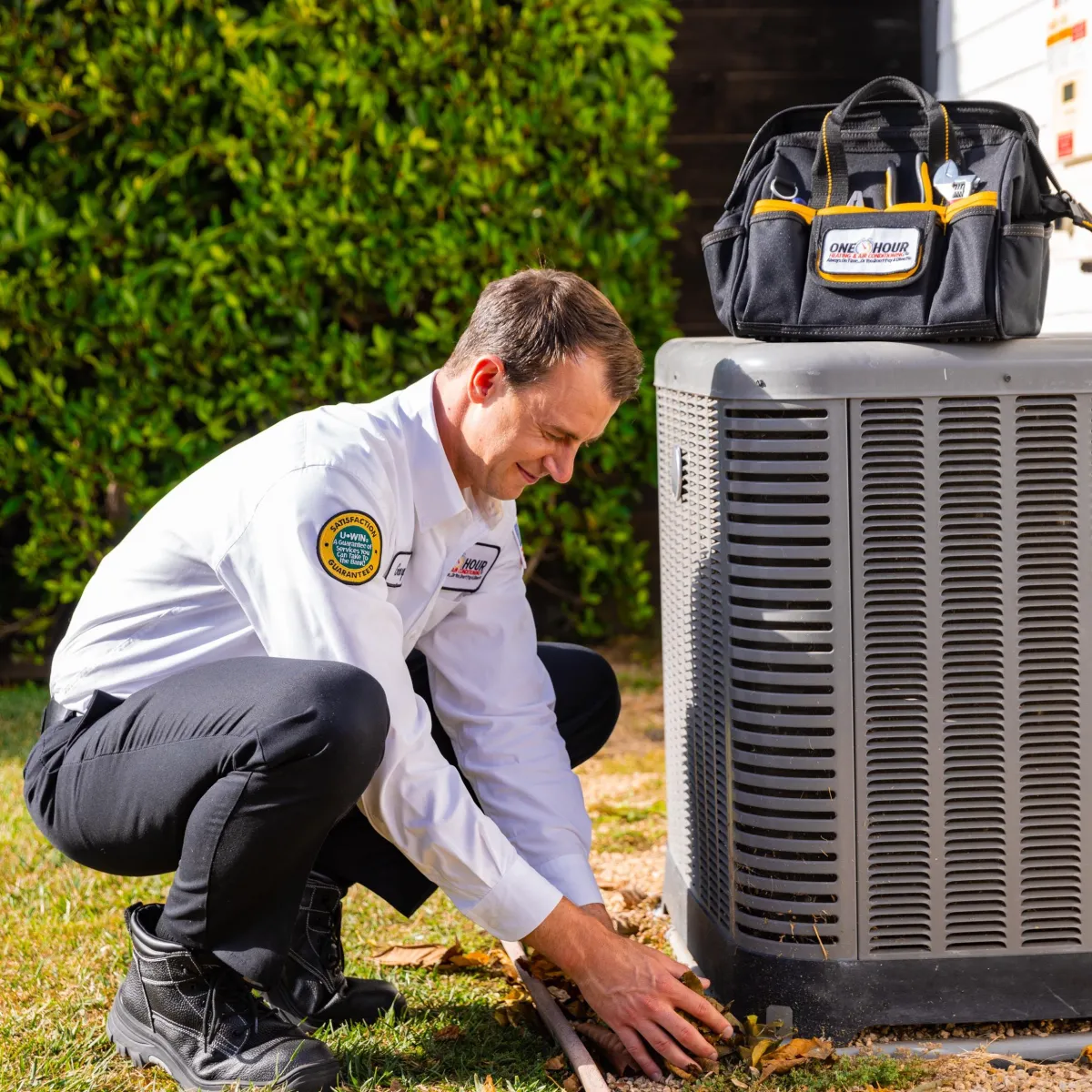
Outdoor unit problems. Fan motor failures, condenser coil damage, debris in the unit, or grade settling causing the pad to tilt. Mature canopy neighborhoods around Marietta Square and East Cobb push more leaf and pollen debris into outdoor units than newer construction.
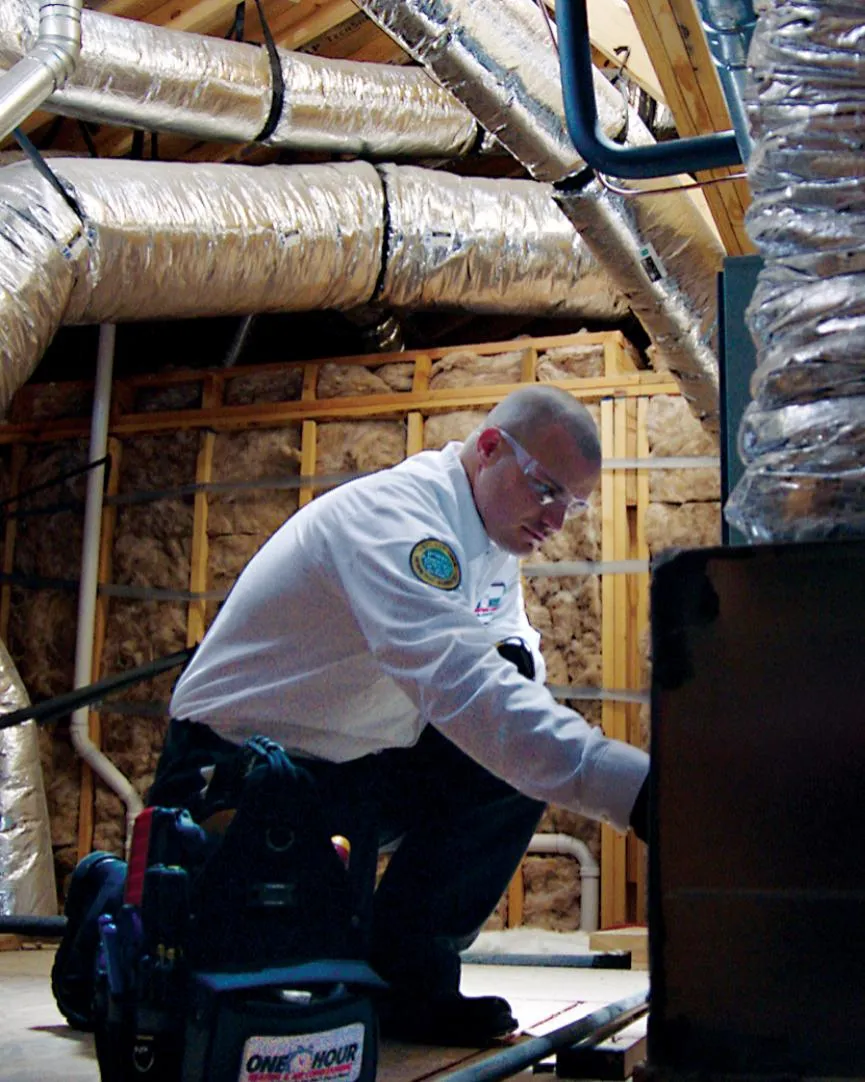
Ductwork issues. Disconnected ducts, crushed ducts, leaking joints, or undersized returns. Older Marietta housing with original 1960s and 70s ductwork in attics commonly leaks 20% or more by now.
Zone control failures. On multi zone systems, zone damper motor failures, control board issues, or sensor problems that cause one zone to cool while another doesn't. Larger East Cobb homes in the Walton, Pope, and Lassiter school zones frequently run multi zone setups.
How We Diagnose AC Problems
The diagnostic process is the same on every call regardless of brand, age, or system type:
1- Listen to what the homeowner describes happening. When it started, what changed, what's normal for the system.
2- Check the thermostat and zone controls. On multi zone East Cobb homes, we confirm each zone is calling correctly before chasing equipment issues.
3- Check airflow at the equipment and at the rooms. Marietta's older subdivision ductwork commonly leaks 20% or more and gets investigated before chasing equipment problems.
4- Check refrigerant pressures against the manufacturer's spec on the unit nameplate, not against a generic chart.
Check electrical components with a meter. Capacitors get tested against their rated value, not eyeballed.
5- Check the outdoor unit, the indoor unit, and the connections between them.
6- Walk through findings with the homeowner before any repair work starts.
7- Provide a written estimate. The homeowner approves or declines before any parts come off the truck.
The $89 service call covers the visit, the full diagnostic, and the written estimate. If you approve the repair, the $89 is applied to the repair cost.
AC Repair in Marietta, What's Specific to This City
Marietta sits in Cobb County, not Fulton, and the jurisdictional difference matters when the conversation shifts from repair to replacement. HVAC permits run through the City of Marietta for properties inside city limits, and through Cobb County Community Development for unincorporated areas with Marietta postal addresses (which is a lot of the East Cobb side). The fee schedules and inspection patterns are different from what Fulton County homeowners encounter, and we handle the permit coordination on system replacements.
Water in Marietta comes from the Cobb County-Marietta Water Authority, drawing from Allatoona Lake and the Chattahoochee. It's soft at about 2.2 gpg or 38 mg/L, confirmed directly from CCMWA. The soft water has a small but real effect on AC repair patterns: scale buildup on evaporator coils and inside refrigerant line components, which is a contributing factor in failures in some hard water cities, is essentially not a Marietta failure mode. When we see corrosion or fouling on coils here, it's almost always from condensate pH or biological growth, not scale. That changes the diagnostic conversation when we're looking at why a coil failed early.
The housing in Marietta covers a wider era range than most of the cities we serve. The historic district around Marietta Square has homes built before 1900, with central air retrofitted decades after original construction. The dominant subdivision stock is 1960s through 1990s, with brick exteriors and copper supply lines. There's also newer infill and East Cobb construction that pushes into the 2000s and 2010s. What this means for AC repair: the conversation varies more by neighborhood within Marietta than in cities with narrower housing eras.
Historic district homes near Marietta Square present specific constraints. AC was retrofitted into homes that weren't designed for it, ductwork was often added through chases or in awkward places, and outdoor unit placement is constrained by lot size and historic district considerations. Repair work in these homes sometimes uncovers issues that go beyond a single failed component, like undersized refrigerant lines from the original retrofit or ductwork that was never properly sized for the home's actual cooling load.
East Cobb subdivisions (Indian Hills, Mt. Bethel, areas near the Walton, Pope, and Lassiter school zones) tend toward larger homes with multi zone systems, finished basements that often have their own zone, and equipment that's now on its second generation. The repair pattern here is closer to what we see in Alpharetta and Johns Creek master planned subdivisions, with multi zone diagnostics and larger system capacity.
The Kennesaw Mountain area carries some specific climate considerations. South facing slopes get hit harder by afternoon sun in summer, and homes in those microclimates often have AC systems working at the edge of their rated capacity on the hottest days.
Problems We See More Often in Marietta Homes
1960s through 1990s subdivision equipment on its second or third generation. Marietta's predominant subdivision housing is now twenty to fifty years out from original construction. The original AC equipment has typically been replaced once or twice, and the current equipment is often in the seven to fifteen year window where capacitor, contactor, and refrigerant leak repairs become routine. Brick ranch and brick two story homes in the Powder Springs Road corridor and similar areas fit this pattern.
Historic district retrofit constraints around Marietta Square. AC systems retrofitted into pre 1900 homes often have undersized refrigerant lines, awkward ductwork routing through chases, and outdoor units placed in tight spots. When something fails, the repair sometimes uncovers a deeper sizing or installation issue from the original retrofit that has been masking itself for years.
Multi zone diagnostics in East Cobb school zone homes. Larger homes in the Walton, Pope, and Lassiter school zones frequently run multi zone systems with two to four zones. When a zone fails to cool, the diagnostic walks through the zone control board, damper motors, zone sensors, and thermostat communication before getting to the main equipment. East Cobb finished basements with their own zone add another layer.
Condensate drain clogs from mature canopy pollen. Marietta's older neighborhoods have heavy oak, pine, and sweetgum canopy that drives a serious spring pollen load on condensate drains. We see drain clogs as a routine spring and early summer service call across the city.
What to Expect on the Day
When you call us, dispatch confirms your address and the symptom you're describing. We give you an arrival window, and we hold to it. If we're late, you don't pay for the diagnostic. That's the “Always On Time...Or You Don't Pay A Dime!®” guarantee.
When the technician arrives, they walk through the system with you, run the diagnostic, and walk through findings before any repair work starts. You get a written estimate, you approve or decline, and the repair happens that day in most cases because our trucks carry over 1,500 parts. If the repair needs a part we don't have on the truck, we schedule the return trip and let you know how long. The $89 diagnostic is waived when you approve the repair.
Most AC repair calls in Marietta finish in two hours or less. Multi zone diagnostics in larger East Cobb homes and constrained retrofit work in historic district homes can run longer because there's more to walk through.
Cost Considerations for Marietta Homeowners
AC repair in Marietta runs $228 to $3,000+ depending on what's wrong. The low end covers capacitor and contactor replacements, which are the most common repair calls on 1960s through 1990s subdivision homes where the equipment is on its second or third generation. The high end covers compressor replacements, full coil replacements, and zone control board replacements on multi zone systems.
Historic district homes around Marietta Square can push repair costs higher when the diagnostic uncovers issues beyond a single component, like undersized refrigerant lines or ductwork problems from the original retrofit. We walk through those findings before any work expands beyond the original scope.
If your system is twenty plus years old and the repair quote is approaching half the cost of a new system, we'll tell you straight rather than push the repair. AC replacement runs $2,500 to $8,000+ with financing as low as $109/month, and a complete HVAC system (AC plus furnace or heat pump combination) runs $7,000 to $25,000+. The math on repair versus replace depends on the system age, the repair cost, and what shape the rest of the system is in.
Our Comfort Club membership is $177/year and includes one AC tune up, one furnace tune up, priority scheduling on service calls, and 15% off all repairs. For Marietta homeowners with multi zone East Cobb systems or homes in the mature canopy neighborhoods where pollen drives more frequent maintenance, the membership math usually works out favorably on a single service call most years. The $89 diagnostic is also waived for Comfort Club members.
Permit fees for system replacements [VERIFY: City of Marietta and Cobb County HVAC permit fee schedules] are billed separately from the repair or replacement cost, and the fee varies depending on whether the property is inside Marietta city limits or in unincorporated Cobb County with a Marietta postal address.
Need AC Repair service in Marietta, GA
24/7 dispatch. Upfront flat rate pricing. "Always On Time...Or You Don't Pay A Dime!"
Recent Work Near Marietta
Marietta Square historic district home, original structure pre 1900 with AC retrofitted in the 1990s. Homeowner called because the AC was tripping the breaker on startup. Diagnostic found a failed hard start kit and a marginal capacitor that had been compensating for an undersized refrigerant line from the original retrofit. Replaced the start kit and capacitor, documented the line sizing issue for the homeowner to weigh in a future replacement decision. Same day repair on the immediate failure.
Indian Hills (East Cobb) two story brick home off Walton school zone, original 1988 construction with the AC equipment replaced in 2010. Homeowner called because the upstairs zone wasn't cooling. Diagnostic found a failed zone damper motor and a partially blocked return air filter on the upstairs zone. Replaced the damper motor, walked the homeowner through the maintenance schedule for both zones. Same day repair, finished in just under two hours.
Powder Springs Road corridor 1970s brick ranch. Homeowner called because the AC was running constantly without cooling on a 91 degree day. Diagnostic found low refrigerant from a slow leak at the evaporator coil joint plus 22% ductwork leakage in the attic measured at the registers. Pressure tested the system, repaired the coil joint, recharged with R-410A, and walked the homeowner through the ductwork conversation as a separate decision. The homeowner had been topping off refrigerant for two seasons without anyone identifying the leak.
Neighborhoods in Marietta
Marietta Square and the historic district. Homes here range from pre 1900 through early 20th century, with central air retrofitted decades after original construction. Repair work in these homes sometimes uncovers undersized refrigerant lines, awkward ductwork routing, or outdoor unit placement constraints from the original retrofit. We've worked on enough of these to know what to look for.
East Cobb (Indian Hills, Mt. Bethel, areas near Walton, Pope, and Lassiter school zones). Larger homes, often two story brick, frequently with multi zone systems and finished basements. The repair pattern is similar to what we see in Alpharetta and Johns Creek master planned subdivisions, with multi zone diagnostics being a regular part of the work. Equipment in this area is typically on its second generation now.
Powder Springs Road corridor and 1970s/80s brick ranch neighborhoods. Predominant 1960s through 1990s subdivision housing, brick exterior dominant, copper supply lines from original construction. The equipment is now in the routine repair window for capacitor, contactor, and refrigerant leak service.
Gallery and Video

FAQs About AC Repair in Marietta
Do I need a permit for AC repair work in Marietta?
Most repair work doesn't require a permit. Component replacements like capacitors, contactors, motors, and refrigerant work are repair, not installation. Full system replacements do require a permit, and Marietta has two jurisdictions depending on your address: the City of Marietta handles permits for properties inside city limits, and Cobb County Community Development handles permits for unincorporated areas with Marietta postal addresses (which covers most of East Cobb).
I've heard Cobb County water is soft. Does that affect my AC?
Marietta's water comes from CCMWA at about 2.2 gpg, which is soft. The direct effect on AC repair is small but real: scale buildup on evaporator coils and refrigerant line components, which is a contributing failure mode in some hard water cities, isn't really a Marietta failure mode. When we see coil fouling here, it's almost always from condensate pH or biological growth, not scale. That changes how we diagnose certain failures.
My AC ices up every few weeks. What's actually causing it?
A frozen evaporator coil almost always means one of three things: low refrigerant from a leak, restricted airflow from a dirty filter or blocked return, or a stuck blower motor. We thaw the system, find the underlying cause, and fix the cause. Just refilling the refrigerant without finding the leak means you'll be calling us back in a month.
My home is in the historic district. Are there special considerations for AC repair?
The repair itself isn't constrained by historic district rules, but the original AC retrofit in many of these homes was done with undersized refrigerant lines, awkward ductwork routing, or constrained outdoor unit placement. When something fails, the repair sometimes uncovers a deeper issue from that original retrofit. We document what we find and walk through the options before any work expands beyond the original repair scope. Equipment replacement decisions in the historic district may involve historic preservation review depending on outdoor unit placement and visibility [VERIFY: Marietta historic preservation review requirements for outdoor HVAC equipment].
My East Cobb home has a finished basement with its own zone. Why is that zone always the one that has problems?
Finished basement zones tend to have specific challenges: longer duct runs, the basement air handler or zone damper is often in a less accessible location, and the zone calls for cooling under different conditions than the main level zones. When a multi zone system has recurring problems in one zone, the diagnostic walks through the zone control board, the damper motor, the zone sensor, and the duct routing for that specific zone before getting to the main equipment.
Is the Section 25C federal tax credit still available for heat pump installations?
No. The federal Section 25C tax credit for air source heat pumps expired December 31, 2025, under the One Big Beautiful Bill Act. Heat pump installations in 2026 and later don't qualify for the previous $2,000 federal credit. Georgia's GEFA rebate program is still active and can be worth significantly more depending on household income and projected energy savings. Geothermal heat pumps still qualify for the 30% federal credit under Section 25D through 2032.
How long does an AC system last in Marietta?
Ten to fifteen years for most homes in this climate, with the humidity workload being the main wear factor. Marietta homes built in the 1980s and earlier are typically on their second or third AC system by now, and the conversation we have most often is whether the next failure tips into replacement territory or warrants one more repair.
Contact and Directions
1360 Union Hill Rd #5F, Alpharetta, GA 30004
Phone: (404) 689-4168
Hours: 24/7 emergency service. Standard appointment hours
Georgia HVAC License: GAREGCN2011384
Fully insured and bonded.
Our office is a short drive from Marietta, with regular dispatch to the Marietta Square historic district, East Cobb (Indian Hills, Mt. Bethel, the Walton, Pope, and Lassiter school zones), the Kennesaw Mountain area, and the Powder Springs Road corridor. We respect you, we respect your time, and our trucks carry over 1,500 parts so most repairs finish in a single visit.

404-480-4941
1360 Union Hill Rd. STE 5F
Alpharetta, GA. 30004


COMPANY
AIR CONDITIONING
HEATING
Copyright 2026. One Hour Heating & Air Conditioning North Atlanta. All Rights Reserved.